By Professor Helen Ware
Theme “Peace, Resistance Reconciliation”
In Māori “I Te Rongo i Tau, Te Riri i Tau, Te Ringa i Kotuia” there is not a Māori word for reconciliation – this says linking arms together.
The conference took place in New Plymouth, New Zealand/ Aotearoa. 5th to 8th November. It was a very friendly conference with a strong emphasis on grass-roots activities and indigenous activism for peace and justice. Professor Kevin Clements’s opening address was a great challenge to his listeners. As he emphasised: “IPRA and its founders were able to develop theories that worked in the past because there was a liberal international rules-based order (albeit a biased order in favour of the West). In this order, it was possible to devise collaborative and rational solutions to the problems of the day. Regional and global institutions were not under attack and vilified as they are today. The United Nations was never able to fulfil its goals because of P5 dominance of the Security Council, but it was respected for its human rights and humanitarian work, and rational evidence -based solutions to wicked problems were encouraged and applied. None of our peace research ancestors could have imagined the chaos generated by the Trump 2.0 presidency……. The world now has 88 democracies compared to 91 autocracies for the first time in over 20 years”.
The Professor’s analysis of where we are now is powerful and accurate, but, to this researcher, his view of where we are going is as unrealistic as it is attractive. “Peace” he argues “is not something given by the powerful (especially not by the autocrats) – it is something grown, relationally and locally, through trust, truth-telling, personal and social transformation”. For the families of those who died yesterday or who are going to die tomorrow of bombs, bullets or starvation in Gaza, Sudan or Ukraine, peace given by an autocrat would still be a great outcome. Galtung famously distinguished between negative peace when the guns are silent and positive peace when justice and transformation have occurred. This IPRA Conference was largely devoted to positive peace, to the neglect of negative peace and the need to first stop the killing. Clement’s address concluded with an invocation to become “a global tide of compassion, creativity, and courage, flowing from Aotearoa to every fractured corner of the world”. Lovely words, but hardly relevant to the Israeli conscripts, the Russian prisoners released to fight in snow topped trenches or the devils on horseback of Darfur.
With a constant flow of coffee on tap, at times the conference felt like a workshop on cancer to which no surgeons or cancer specialists but only dieticians and faith healers had been invited. There were some 77 presentations and workshops at the conference (some presenters were not able to come, including one from Bolivia to whom Australia had denied a one-hour transit visa). Since there were four concurrent presentations, at most of the nine sessions it was only possible to attend a quarter of these. At least 14 of the 77 items were clearly signalled as relating to peace education which may be a hopeful sign for the future. However, a presentation on the evaluation of the Latin American online peace education program by Esteban Musiera and Diana Agudelo-Ortez showed that the majority of students did NOT change their views in a more peaceful direction as a result of their studies.
As a realist (a negative term to most at the conference) I have a general problem with relying on change at the grassroots level, which even when successful, is too slow and too limited in scope to save many lives, for example in the 35 out of 54 African countries which currently have civil wars (Geneva Academy of International Humanitarian Law 2025).
The presentation on the campaign for nuclear disarmament was impressive but warned of future problems. The speakers had brought their actual Nobel Peace Medal with them as a very powerful symbol
At the practical level, the weather and the physical arrangements were both excellent. [This was the only conference I have ever been to where there was constant coffee on tap and more than enough toilets for females].
There were many good points. These included the emphases on the lives and rights of our Māori hosts and other indigenous peoples; the religious diversity (we started with a prayer from a different spiritual tradition each morning). Female and indigenous voices were heard loud and clear throughout. There were representatives from Gaza, South Sudan, and West Papua and a conscientious objector from Israel. The scope of the conference included the performance of a powerful peace ballet composed for the event.
For me the most memorable session was the in-circle talk by the American First Nations Wampanoag elder: Betina Washington about her people’s island which we would know as Martha’s Vinyard. Betina is a non-academic who has spent her life fighting for her people in a pragmatic and principled way. First Nations Americans refer to the USA as “Turtle Island”. The addresses by the Gazan: Malaka Shwaikh and the West Papuan Rosa Moiwend were both very powerful reflections on their own experiences of genocidal regimes. The Māori closing keynote was a powerful antidote to the stereotype of Māori as being warlike. The conference location in itself was a strong acknowledgement of Parihaka: the Māori peace village founded in the 1870s in non-violent resistance to European settlement on their lands.
IPRA is led by two general secretaries, one male and one female. This year’s new leaders are a female musicologist from Argentina: Maria Elena Lopez Vinader and a male peace educator from Nepal: Rajib Timalsina.


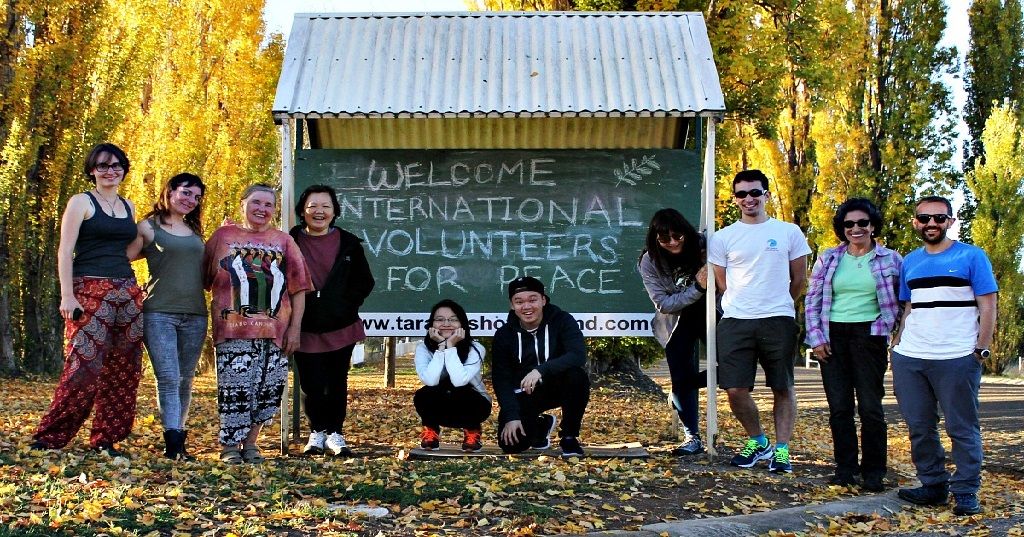


 Protect endangered wildlife in Australia!

 Volunteers: Experience not essential but interest in nature a must.
 Wombeyan & Taralga, NSW
 17 – 31 May 2026
 Apply now: https://www.volunteer.sci.ngo/projects/2612